Sailing the Caribbean by Catamaran

Trade winds, turquoise bays, evenings spent facing the sea… From the Bahamas to the Grenadines, the Caribbean stands out as the ultimate catamaran destination. Private cruise, skippered charter or long-distance voyage: the region caters to every kind of sailor.

A few hours of sailing in the trade winds in the morning, anchoring in a turquoise bay in the afternoon, then an evening on board overlooking the sea… From the Bahamas to Grenada, via the British Virgin Islands and the Grenadines, the Caribbean is one of the world’s most sought-after destinations for catamaran cruising. The region attracts both crews looking to charter a catamaran in the Caribbean for a short getaway and owners embarking on extended voyages as part of an Atlantic circuit or a round-the-world sailing adventure.

Thinking of sailing the Caribbean by catamaran? Whether you are planning a private cruise, a skippered yacht charter or a long-term sailing project, the region offers very different itineraries depending on the season, your level of experience and the type of trip you are looking for.


Key takeaways – Sailing the Caribbean by catamaran

  • The Caribbean is one of the best destinations in the world for a catamaran cruise. The trade winds, tropical temperatures and relatively short passages between islands explain why the region attracts so many sailors every year.
  • The high season generally runs from November to May, with air temperatures between 26 and 30°C, and water temperatures between 27 and 29°C. The trade winds blow steadily for much of the year, with stronger conditions during the dry season.
  • The Grenadines and Tobago Cays, Guadeloupe, Saint Martin and the British Virgin Islands (BVI), in particular, are among the must-see destinations for a Caribbean cruising itinerary.
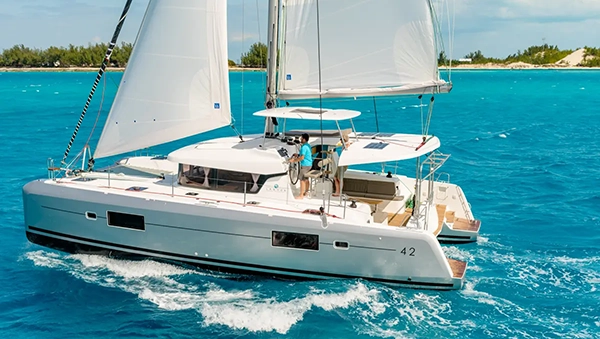
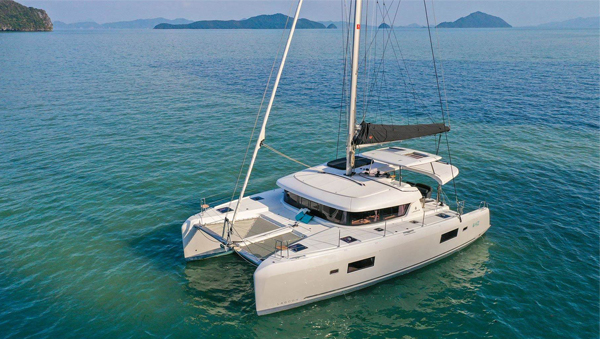
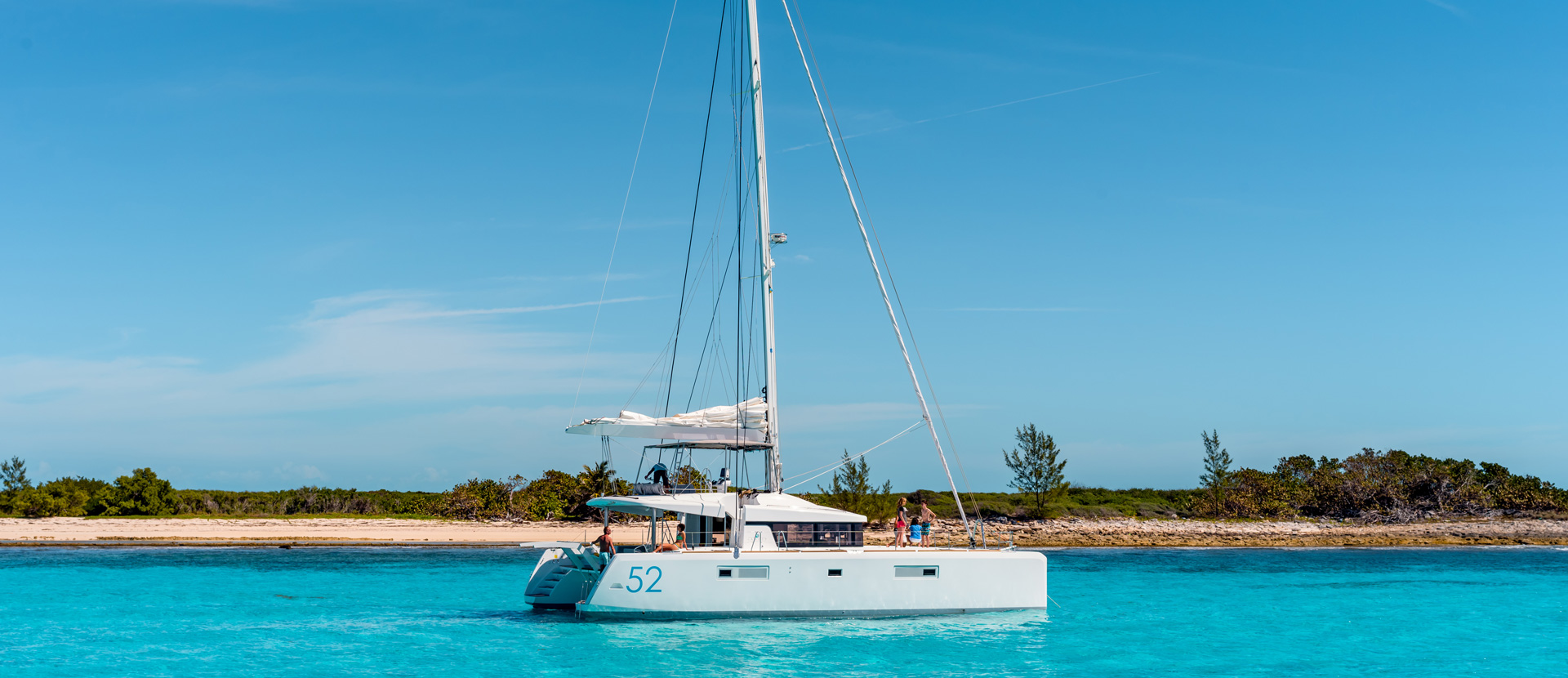
  • The catamaran is especially well suited to discovering the Caribbean by sea, whether as an owner or through charter: shallow draft, stability at anchor and large outdoor living spaces are all highly valued features.

June 18, 2026
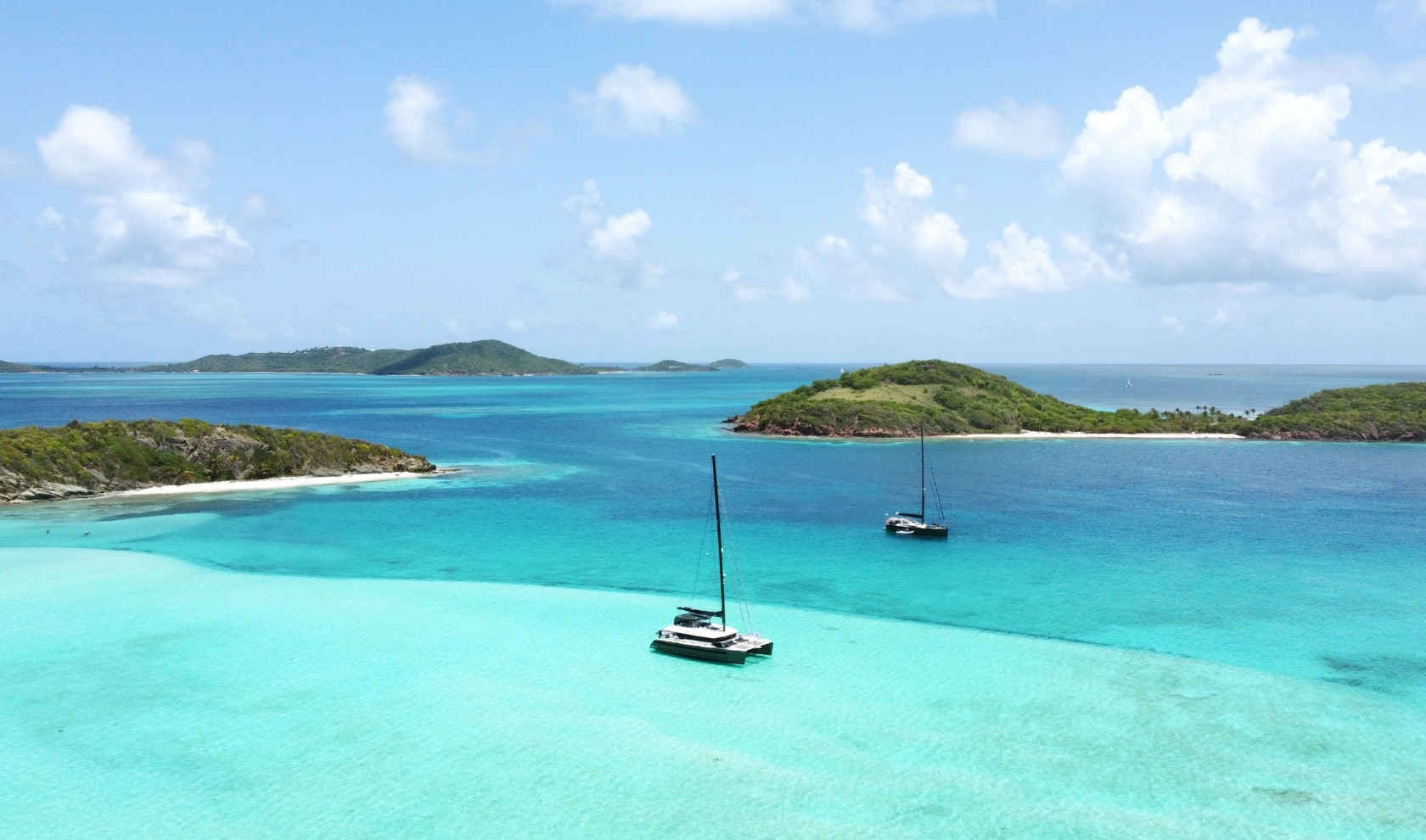
The Caribbean, an ideal region for catamaran sailing


A sailing area perfectly suited to multihull cruising

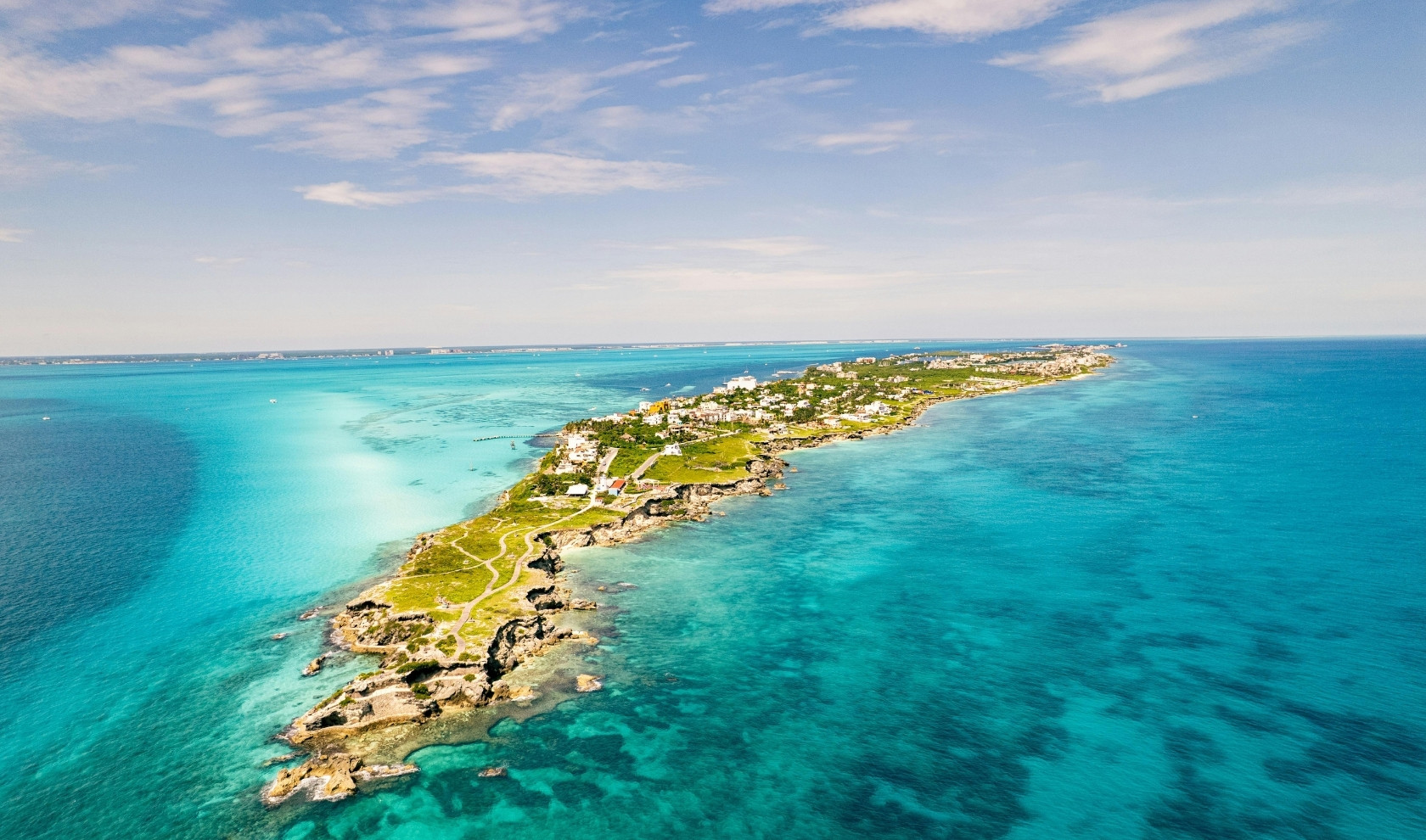
The Caribbean stretches across several thousand nautical miles, from the Bahamas and the Greater Antilles to the Lesser Antilles island chain. Between the Atlantic Ocean and the Caribbean Sea, it forms a vast cruising ground made up of hundreds of islands and islets.

In the Lesser Antilles, islands generally have a “windward” coast exposed to the Atlantic and the trade winds, and a “leeward” coast facing the Caribbean Sea, which is more sheltered. For sailors, this geography makes it possible to vary passages and anchorages depending on weather conditions and the itinerary chosen by the crew.

Each year, the Caribbean attracts thousands of sailors who come to discover it under sail, and especially aboard multihulls. Plans vary depending on personal ambitions: the region can be explored through a catamaran charter, or as part of a long-distance sailing journey aboard one’s own yacht.

Guadeloupe, Martinique, the British Virgin Islands, Saint Martin, the Bahamas… The Caribbean often offers highly favorable conditions for catamaran sailing. Within a given destination, distances from one island to another are reasonable, making it easy to alternate between time under sail and time at anchor.

In this cruising region, the catamaran offers several major advantages:

  • It allows crews to reach shallow anchorages, such as the turquoise lagoons of the Tobago Cays in the Grenadines, Anegada in the British Virgin Islands or the Exumas in the Bahamas.
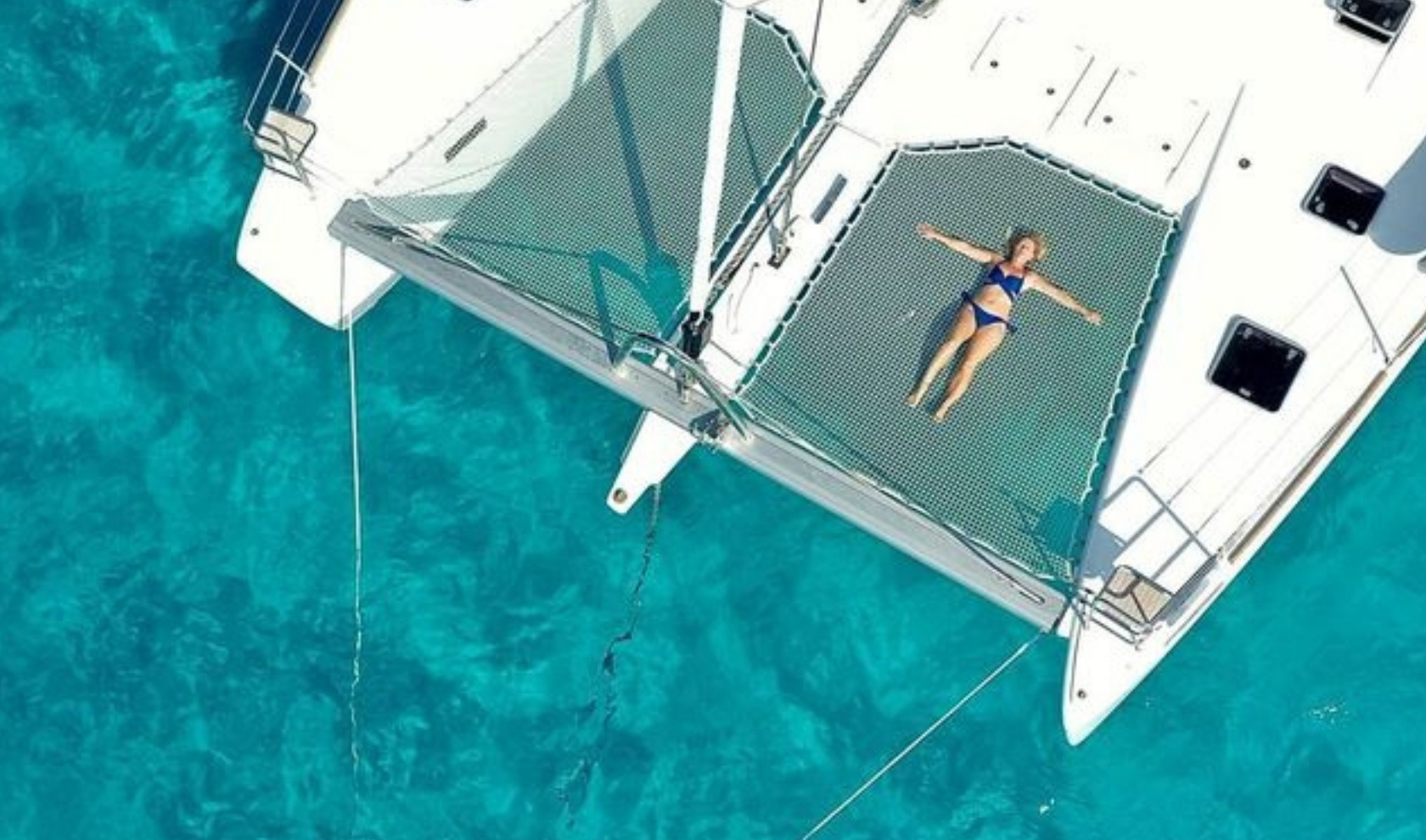
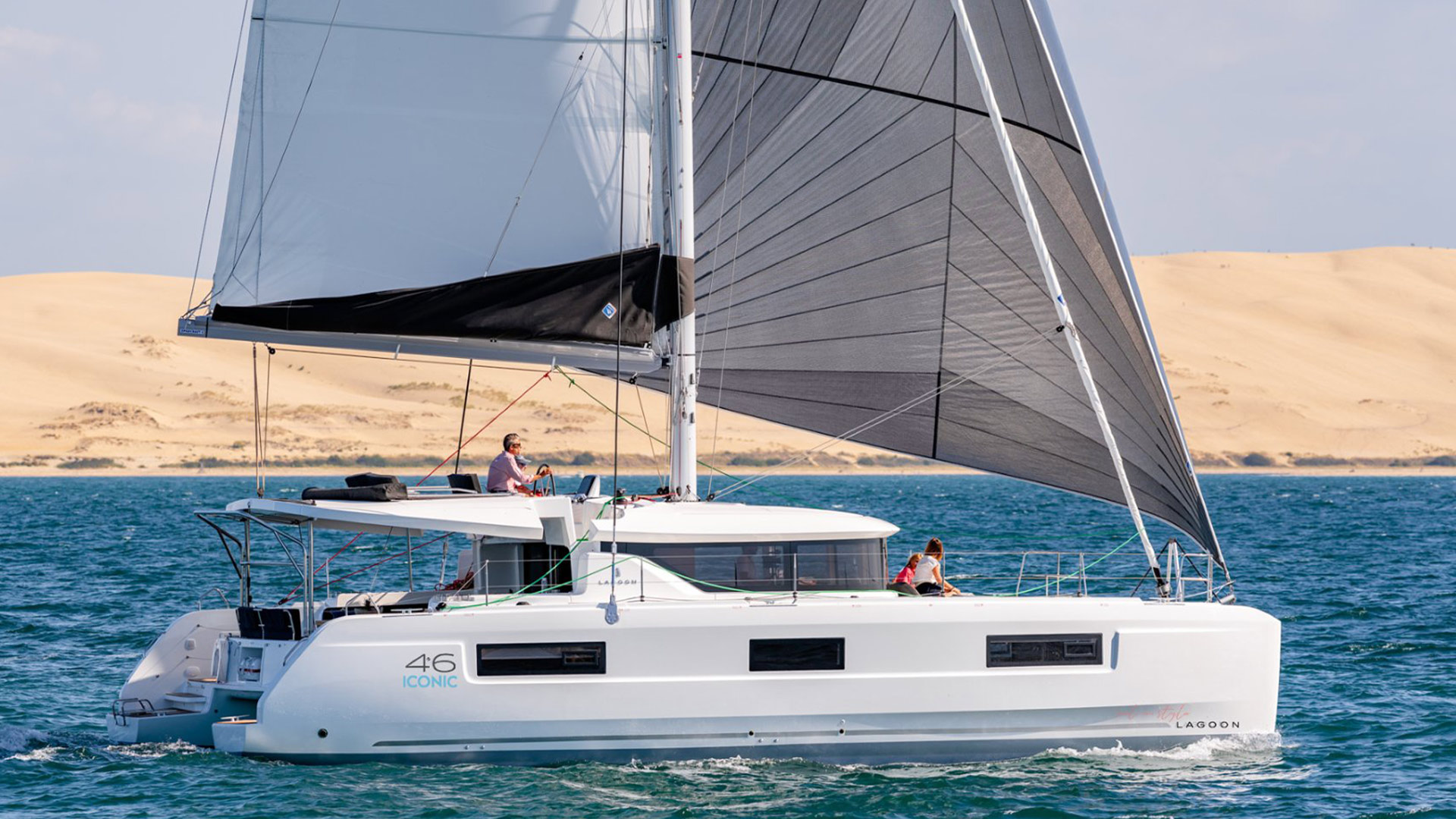
  • The coachroof, cockpit, trampoline and sometimes the flybridge become the yacht’s main living spaces, allowing the crew to fully enjoy the outdoors, Caribbean sunshine and their surroundings.
  • Whether as a couple, with family or with friends, the stability of a catamaran makes life on board especially comfortable, including on trips lasting several weeks.


Favorable weather for much of the year

The high season for a Caribbean cruise runs each year from November to May. During the dry season, the weather is generally very pleasant: Caribbean tropical temperatures range from 26 to 30°C in the air, and from 27 to 29°C in the water. The trade winds blow steadily from east to west, creating enjoyable conditions for sailing.

The Caribbean hurricane season generally runs from June to November. During this period, some crews continue south through the island chain, especially toward Grenada, Trinidad or the ABC islands (Aruba, Bonaire and Curaçao). Others choose to continue westward, or leave their boat in a secure marina and temporarily return to Europe.

Which itineraries should you choose for a catamaran cruise in the Caribbean?


A wide variety of cruising options

One of the Caribbean’s greatest appeals lies in the diversity of cruises it offers. Visiting the Grenadines from Martinique or Saint Lucia is probably the best-known itinerary for a Caribbean catamaran cruise. But the archipelago is far from being the only destination worth exploring by sea.

Other options include, for example:

  • Guadeloupe and its nearby islands (Les Saintes, Marie-Galante, Petite-Terre) – ideal for planning a 10- to 15-day cruise with short passages and diverse nature-focused stopovers
  • Saint Martin, Anguilla and/or Saint Barthélemy – to enjoy white sandy beaches and lively moments in marinas and ashore, in some of the Caribbean’s busier ports
  • The Bahamas – for snorkeling sessions and, for example, observing turtles and fish in protected areas
  • The British Virgin Islands (BVI) – to discover unique anchorages and a strong sailing culture
Sailing in the Islands of the Grenadines

Cruising the Grenadines for a first major voyage

Saint Vincent, Bequia, Mayreau, Union Island, the Tobago Cays… The Grenadines are one of the top destinations associated with sailing in the Caribbean.

Between Martinique or Saint Lucia and the southern Grenadines, the relatively short distances and many possible stopovers make for easy and highly enjoyable sailing for a catamaran crew.

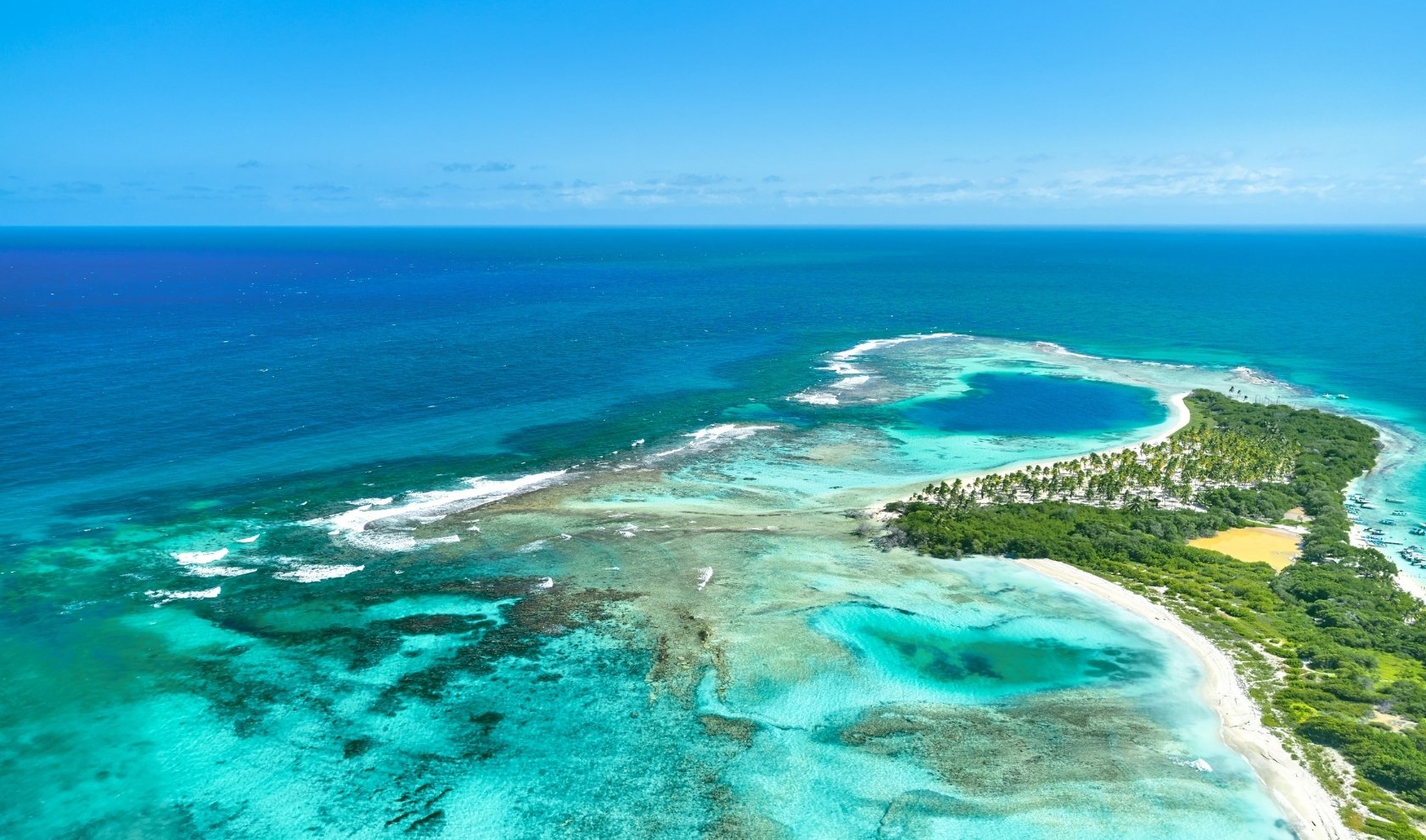
Among the Caribbean’s most famous anchorages, the Tobago Cays are a protected marine reserve renowned for their translucent waters and shallow seabeds. The area is particularly well suited to catamarans, as well as to water sports enjoyed directly from the boat: snorkeling, kitesurfing, wing foiling…


Example of a catamaran itinerary in the Grenadines (247 nautical miles)

  • Martinique (Le Marin) → Saint Lucia – 30 nautical miles
    Saint Lucia → Saint Vincent – 40 nautical miles
    Saint Vincent → Bequia – 16 nautical miles
    Bequia → Mustique – 14 nautical miles
    Mustique → Mayreau – 20 nautical miles
    Mayreau → Tobago Cays – 5 nautical miles
    Tobago Cays → Morpion – 7 nautical miles
    Morpion → Petit Saint Vincent – 1 nautical mile
    Petit Saint Vincent → Bequia – 30 nautical miles
    Bequia → Saint Vincent – 18 nautical miles
    Saint Vincent → Saint Lucia – 36 nautical miles
    Saint Lucia → Martinique (Le Marin) – 30 nautical miles


Guadeloupe for an accessible cruise

The island of Guadeloupe is another departure point for a Caribbean cruise: thanks to direct flights from Paris and several major French cities, it is very easy to reach a catamaran charter base in Pointe-à-Pitre.

From there, you can quickly sail to Les Saintes, Marie-Galante and/or Petite-Terre, even on a shorter stay.

With short distances between the bays and islands to explore, sailing in the French West Indies is particularly well suited to crews discovering the Caribbean for the first time.

Among the must-see stopovers are Deshaies Bay, Gosier Islet, Îlet à Cabrit and Anse du Bourg.


Example of a catamaran itinerary departing from Pointe-à-Pitre (156 nautical miles)

  • Pointe-à-Pitre (Bas-du-Fort Marina) → Îlet du Gosier – 3 nautical miles
    Îlet du Gosier → Marie-Galante – 19 nautical miles
    Marie-Galante → Dominica – 28 nautical miles
    Dominica → Les Saintes – 30 nautical miles
    Les Saintes → Deshaies – 30 nautical miles
    Deshaies → Malendure – 9 nautical miles
    Malendure → Pointe-à-Pitre (Bas-du-Fort Marina) – 37 nautical miles


Other Caribbean islands are also accessible by direct flight from mainland France: for example, it takes only 8 to 9 hours to reach Martinique or Saint Martin from Paris.

This proximity makes it easy to organize a catamaran charter for the holidays, but also to quickly rejoin your own boat for several weeks or months of sailing each year. For those living aboard a catamaran in the Caribbean, it also remains relatively simple to return to France occasionally or welcome family and friends on board.


The Caribbean as part of an Atlantic circuit

For many yacht owners, the Caribbean is a major stage of an Atlantic circuit by catamaran: after an ocean crossing from Europe via the Canary Islands, crews generally spend several months in the Lesser Antilles before making the return passage from the Caribbean to Europe via the Azores.

Others choose to continue on toward Panama and the Pacific Ocean as part of a round-the-world sailing adventure.

Sailing distances between Caribbean islands


Caribbean cruising area Examples of crossings
Bahamas
  • Nassau → Eleuthera: 62 nautical miles
  • Nassau → Shroud Cay: 65 nautical miles
  • Nassau → George Town (Exumas): 138 nautical miles
British Virgin Islands
  • Tortola (Road Town) → Virgin Gorda: 12 nautical miles
  • Tortola → Peter Island: 10 nautical miles
  • Tortola → Cooper Island: 7 nautical miles
Saint-Martin
  • Saint Martin (Anse Marcel) → Anguilla: 15 nautical miles
Guadeloupe
  • Pointe-à-Pitre → Marie-Galante: 21 nautical miles
  • Pointe-à-Pitre → Les Saintes: 22 nautical miles
  • Pointe-à-Pitre → Deshaies: 46 nautical miles
Martinique
  • Le Marin → Saint Lucia: 25 nautical miles
Grenadines
  • Saint Lucia → Saint Vincent: 52 nautical miles
  • Bequia → Tobago Cays: 26 nautical miles

Life on board a catamaran in the Caribbean


A daily rhythm shaped by island discovery

In the Caribbean, the short length of passages generally leaves plenty of time to enjoy the yacht and its surroundings. Swimming, stand-up paddleboarding, snorkeling, beaches, hiking and onshore discoveries… in most cases, from breakfast until sunset, it is the activities around sailing and stopovers that truly shape a catamaran cruise.

A Day Aboard a Cruising Catamaran: The Lagoon Experience from Dawn to Dusk

The importance of self-sufficiency on board

In the Caribbean, it is common to spend several nights in a row at anchor, the catamaran surrounded by turquoise water. This way of travelling encourages crews to pay particular attention to the resources available on board, especially water and energy. Some catamaran models depend heavily on marina infrastructure and need to return to port regularly. Many Lagoon catamarans can be equipped with watermakers and solar panels to provide autonomy in both fresh water and electricity.

On several models in the range, the UVOJI water purification system also reduces the need to carry plastic bottles by making it possible to drink water directly on board.

Your sailing comfort on our catamarans: our choices and equipment

Prepare your Caribbean sailing plans with Lagoon

Whether you are considering your first catamaran charter or planning a major Caribbean cruise, preparing your multihull depends above all on the sailing program you have in mind:

  • Length of stay on board
  • Number of guests on board
  • Areas you want to explore
  • Type of sailing you are looking for
  • Desired level of autonomy

Lagoon catamaran charter companies and dealers can support you in shaping your project and help you choose the model best suited to your needs.

Find a Lagoon dealer

FAQ – Sailing the Caribbean by catamaran


Why is a catamaran particularly well suited to the Caribbean?

A catamaran’s shallow draft gives access to many anchorages, making it possible to discover exceptional Caribbean destinations. Both under sail and at anchor, the boat’s stability is also highly appreciated.


What is the best time to sail the Caribbean by catamaran?

The most favorable period generally runs from November to May: air temperatures range between 26 and 30°C, the trade winds blow steadily, and weather conditions are usually stable for sailing.


What are the most beautiful catamaran itineraries in the Caribbean?

In the Caribbean, the Grenadines (Saint Lucia, Saint Vincent, Bequia, Mayreau, Union Island, the Tobago Cays) are among the most renowned itineraries. The British Virgin Islands, as well as Guadeloupe and its nearby islands in the French West Indies, are also very popular.


Can you sail the Caribbean during hurricane season?

The Caribbean hurricane season broadly runs from June to November. Sailing is still possible, but it is recommended to favor areas with lower risk—especially the southern part of the Lesser Antilles, such as Grenada, Trinidad or the ABC islands. Regularly checking weather forecasts remains essential.


Is the Caribbean suitable for a long-term sailing project?

Yes. The Caribbean is almost always one of the cruising grounds chosen by crews on long-distance voyages around the world or on an Atlantic circuit. Thanks to the great diversity of destinations to explore, it is easy to spend several months there. Direct air access from France is also a real advantage, especially for welcoming family and friends on board.