Living on a catamaran as a family: organisation, safety and comfort on board

When you choose to live on a catamaran as a family, your boat becomes your family home for several months, sometimes even several years. You sail, cook, work and homeschool on board… and everyone needs to find their own place.

Life on board revolves around two different rhythms: that of family life and that of travel. A weather window may bring a departure forward, a stopover may make you want to stay at anchor for a few extra days, and a morning may, for example, be devoted to school before heading ashore to explore.

How do you organise life on board with children? How can you keep them safe, organise their education and give them the tools they need to grow and thrive?


Key takeaways – Living on a catamaran as a family

  • On a catamaran, the family rhythm needs to adapt to the weather, sailing plans and stopovers
  • Schooling should be planned before departure and then organised according to the children’s ages and the travel programme
  • Needs change with age: a young child and a teenager do not require the same level of independence or privacy on board
  • Simple, consistent safety rules gradually give children clear guidelines
  • Living spaces, storage, water, energy and connectivity become essential when the whole family lives on board.

October 7, 2026

Living on a catamaran as a family: what does everyday life really look like?

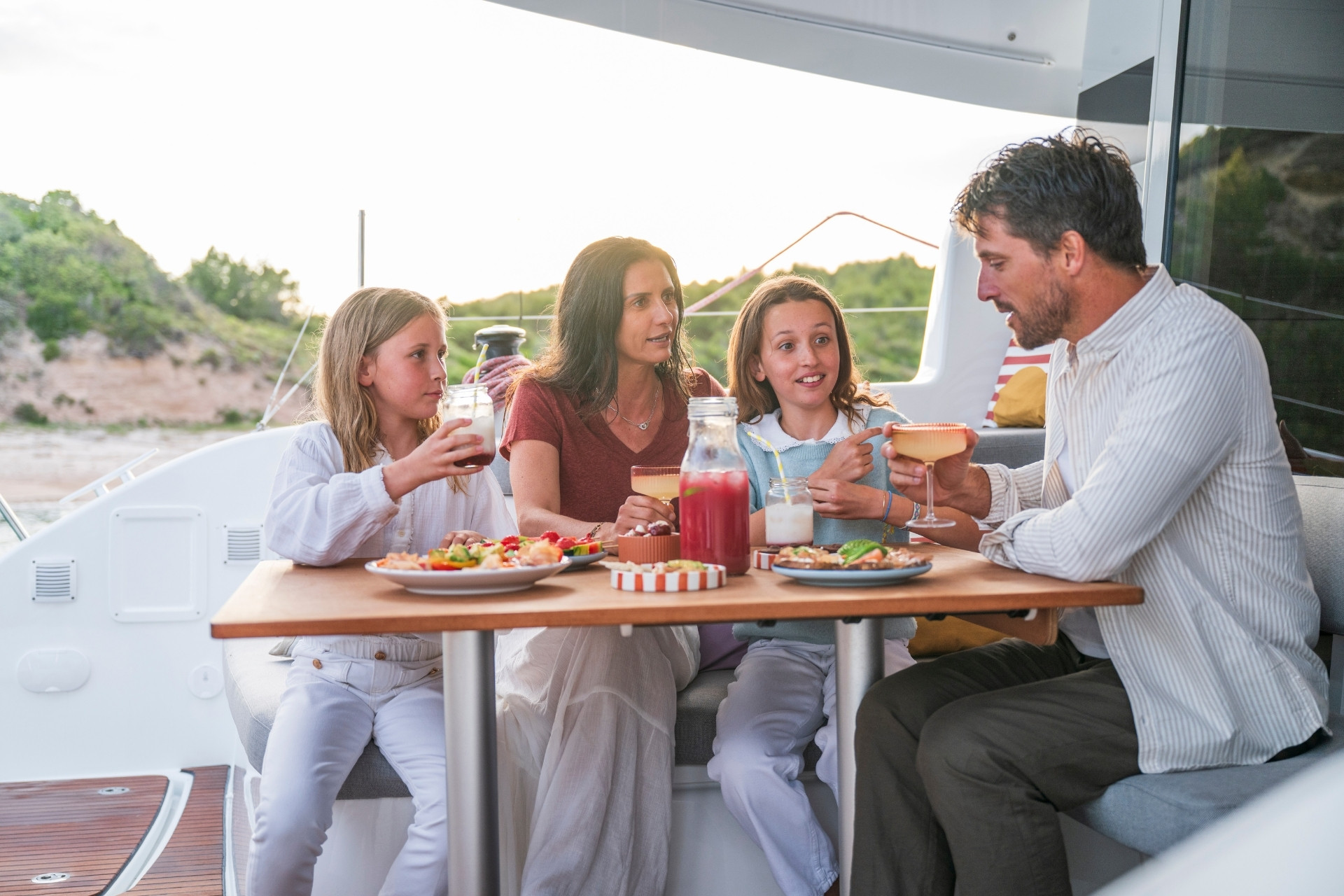
The difference between a few days on holiday and several months on board a catamaran can be seen in the most ordinary tasks: whether sailing or at anchor, you still need to prepare meals, put away the groceries, do schoolwork, maintain the boat and, potentially, work. The difference is that all of this now takes place around your sailing plans and destinations!


Finding a rhythm between sailing, stopovers and family life

At anchor, the day might start with school before going for a swim or heading ashore. When sailing, priorities shift – preparing the boat, keeping the children occupied, planning simple meals and ensuring that the adults remain available to sail the boat. This rhythm is never exactly the same from one day to the next: a favourable weather window may mean setting off in the morning rather than the afternoon, or vice versa. Conversely, spending a few days at anchor in a sheltered bay can make it easier to establish a more regular routine.

Your itinerary will always influence the organisation of everyday life. For this reason, we recommend defining the approximate length of your trip, the composition of your crew, the destinations you want to discover and how you would like to live on board before choosing your catamaran.

A day on a Lagoon catamaran

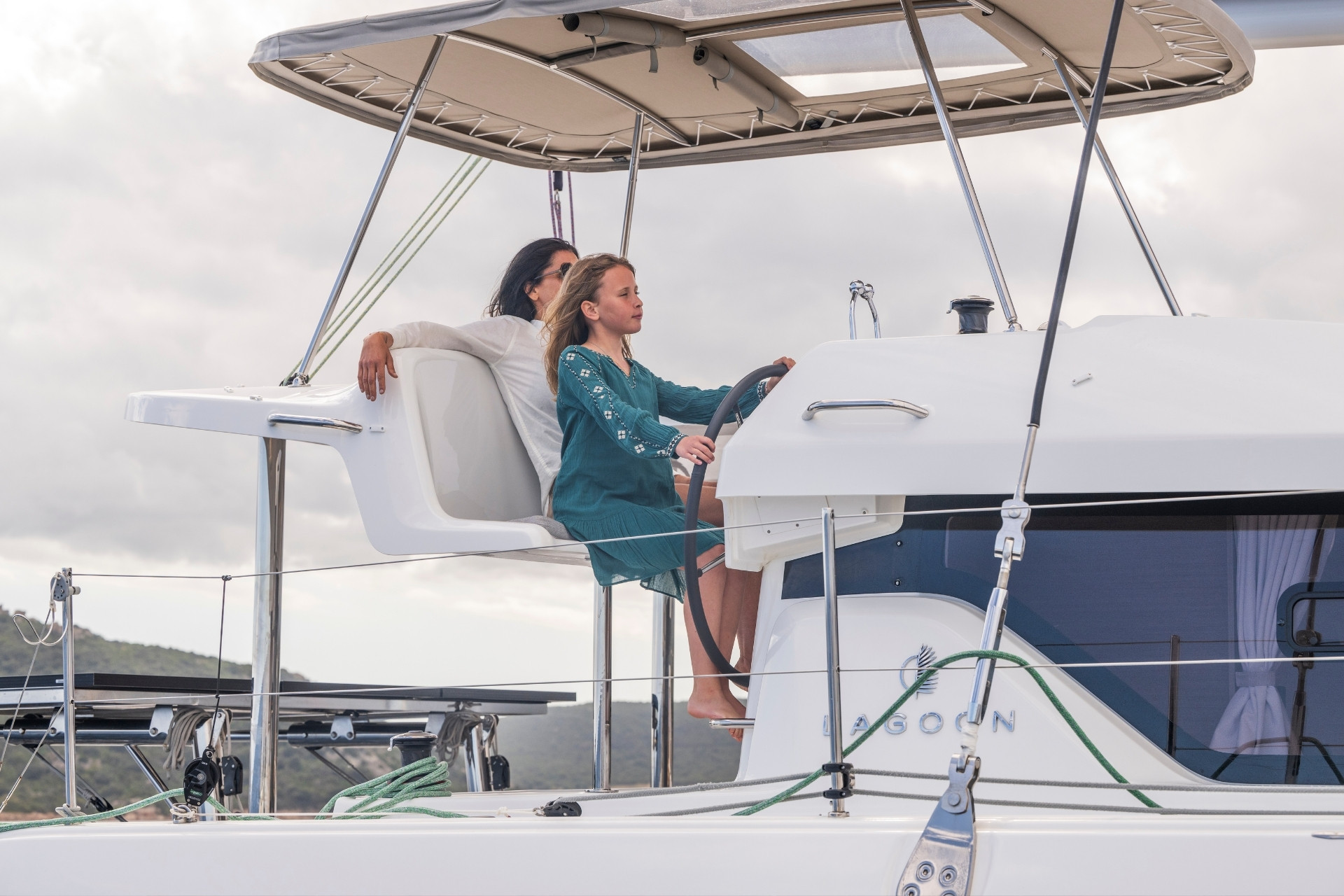
Making everyone a member of the crew

Living together on a catamaran means sharing certain tasks: putting belongings away, preparing what you will need ashore or helping with provisioning are all small responsibilities that children can gradually take on, depending on their age. Everyone’s involvement makes life on board easier for the whole family.

While navigation decisions, manoeuvres and safety remain the responsibility of the adults, older children can take an interest in the route, observe the weather or understand why the boat is leaving earlier or later than planned.


Living together without always being together

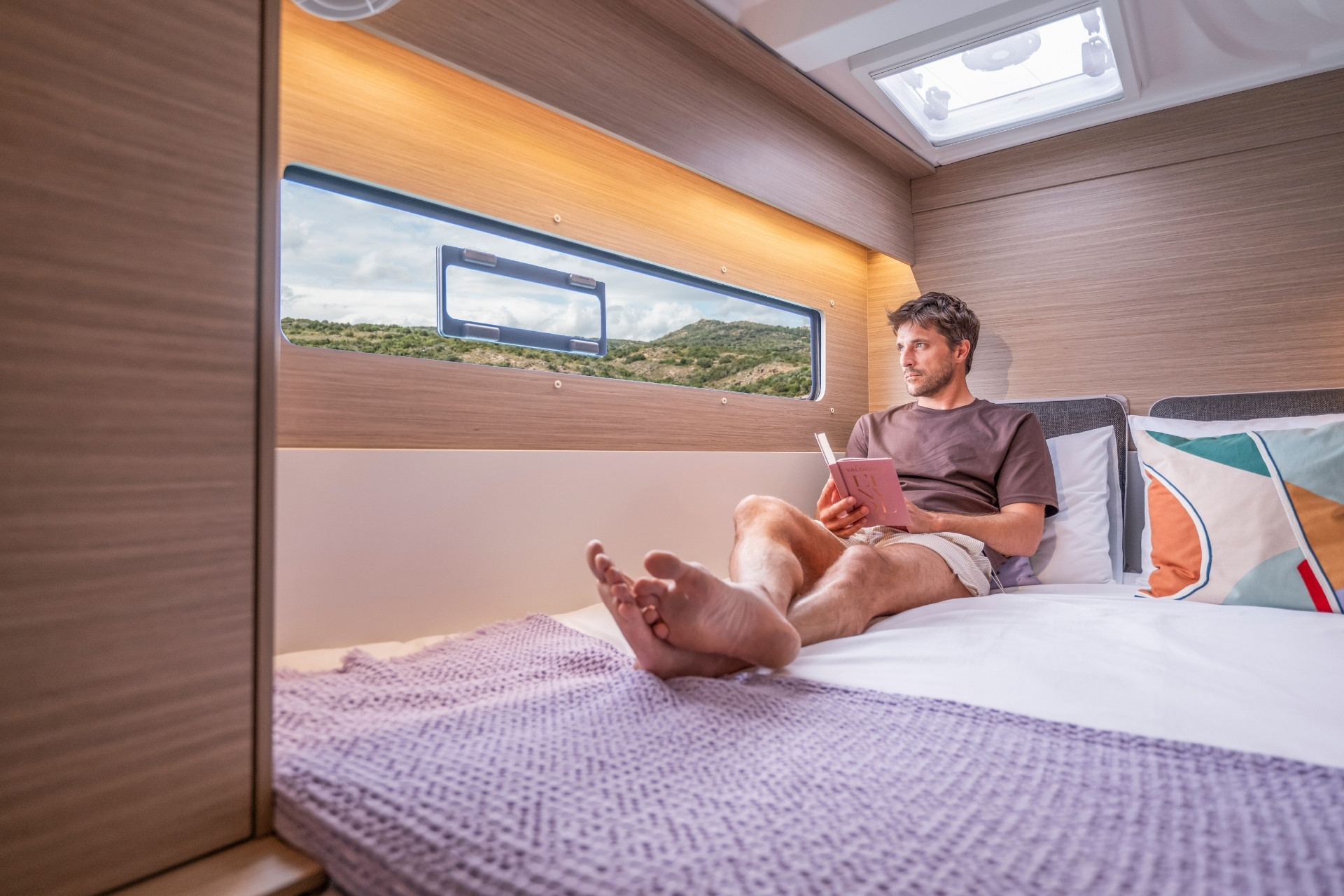
When travelling as a family, you may spend several days without leaving the boat. At these times, comfort depends as much on shared spaces as on having somewhere to retreat to. On board, a young child will often seek to stay close to their parents. A teenager, on the other hand, may need a cabin where they can close the door, study and stay connected with friends online. As children grow, the way spaces are used naturally evolves over the years.

Some Lagoon families have experienced this first-hand. Dave and Gudrun Hibberd, for example, sail their Lagoon 400 with their children Ben and Gaby. When their previous boat became too small, the family specifically looked for a layout that would give each child their own cabin, while still keeping a cabin available for guests.

Discover how they personalised their catamaran

How do you homeschool when living on a catamaran?

When travelling for several months or years, education inevitably becomes part of the project. It is important to distinguish between the framework in which the child will continue their education and the practical organisation of learning on board.


Planning your children’s education before departure

Homeschooling, distance learning… the options available for educating a child vary depending on their age, country of residence, length of the trip and the family’s administrative situation. Requirements should be checked before departure with the relevant official authorities.

Once the framework has been established, the next step is to organise schoolwork on a daily basis. Some subjects can be studied using offline resources, while others require regular internet access, video calls and communication with a teacher.

It can also be useful to plan ahead for your return ashore. Depending on the length of the trip, the educational programme followed and your child’s age, we recommend finding out about the options for returning to a more traditional school system when you come home.


Finding a school routine that works with travelling

School on board does not have to reproduce a typical school day on land. You could, for example, devote part of the morning to schoolwork while the boat is at anchor, before heading ashore to discover your new destination. The next day, an early departure may mean moving that time slot. Whatever the schedule, we believe the important thing is to maintain a rhythm and establish sufficiently regular routines.

The workspace also matters. With several children, everyone’s notebooks, books and computers can quickly take up space. Being able to give your children a proper place to work will help them concentrate more easily. Once the session is over, school materials can be put away so that they do not permanently occupy the family living space.

Internet access is also part of organising schoolwork: downloading resources, video calls, communicating with teachers and accessing online tools all need to fit into the routine you have chosen.

School also takes time for parents. The younger the children, the greater the amount of support you will need to provide throughout the day!


Turning travel into an opportunity to learn differently

On a catamaran, a nautical chart can spark a conversation about geography. Observing the sky and the wind provides an opportunity to explore weather phenomena. Each new destination offers the chance to discover a language or dialect, history and culture…

Managing the boat, for example by monitoring water and electricity consumption, can also become a valuable learning experience.

Growing up on board: friends, activities and independence

What about friendships? For children and adults alike, meeting people depends greatly on the stopovers. In marinas or anchorages frequented by other sailing families, children and adults can quickly meet crews who share the same way of life. The internet also helps maintain contact with friends back home or those met along the way. For teenagers in particular, this continuity is important.

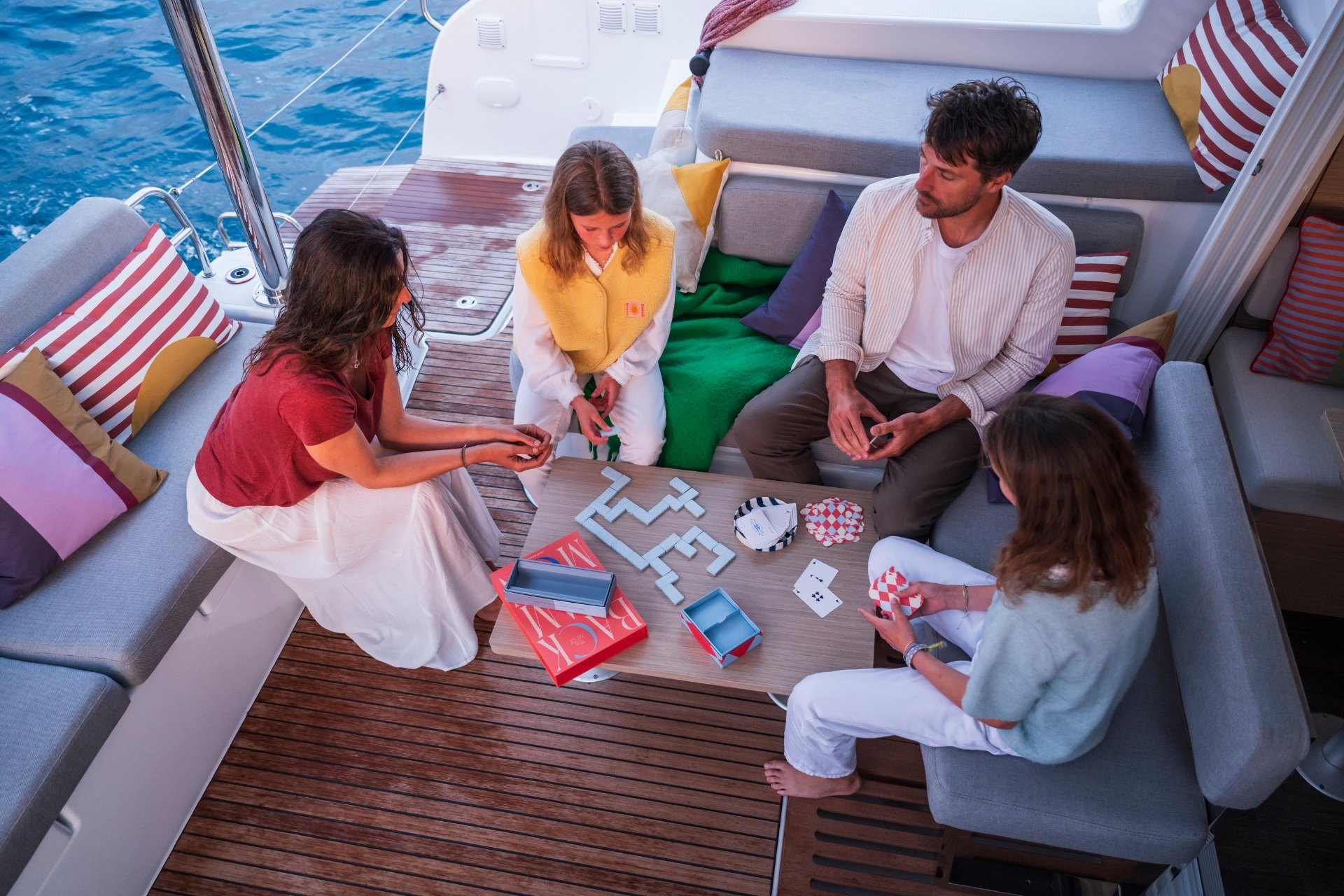
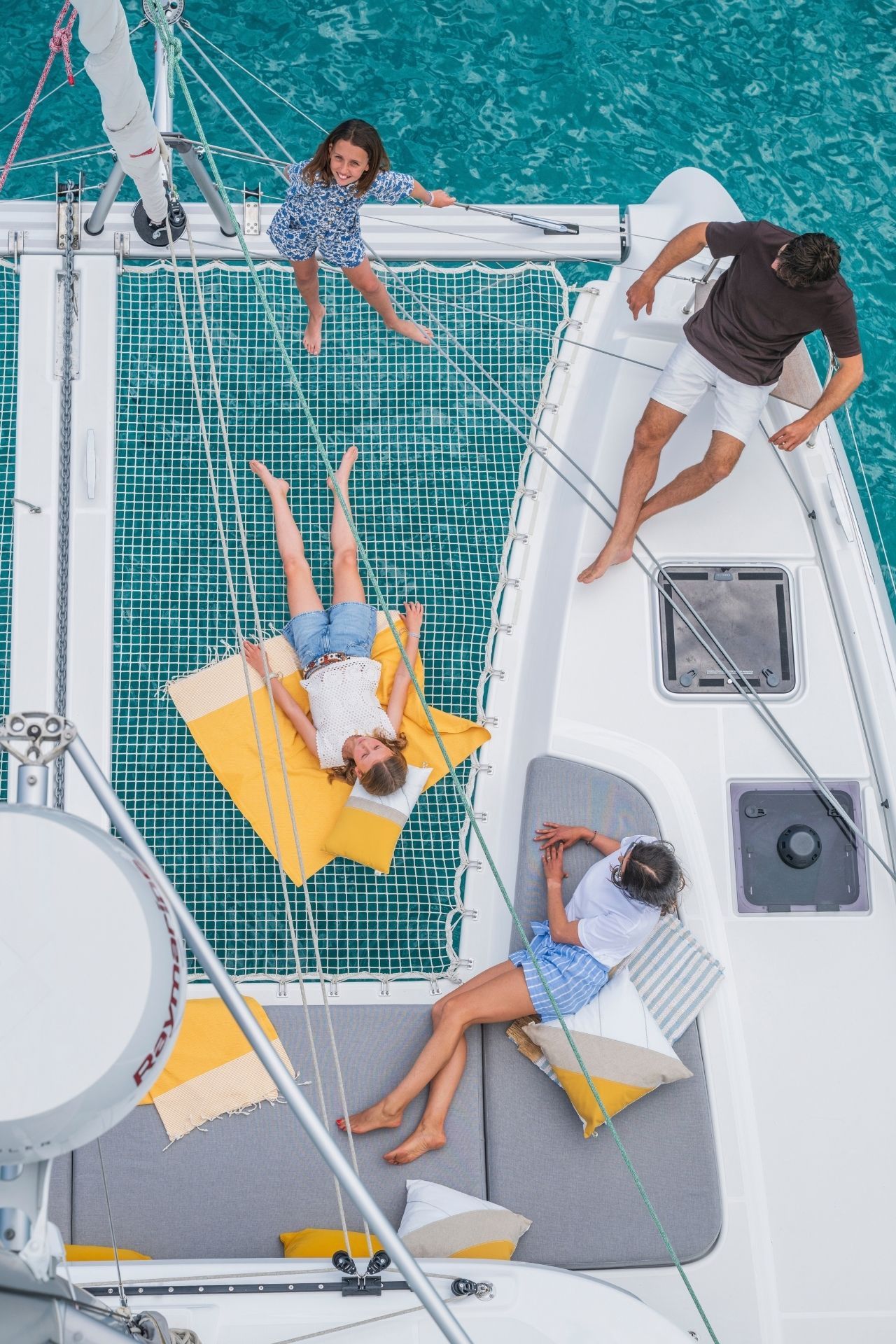
Family life on board also offers plenty of activities to enjoy together: swimming, for example, snorkelling, stand-up paddleboarding, hiking or exploring a new destination.

On board Vitamin Sea, a Lagoon 42, Doreen, Nicolas and their family share their life on board after more than 18 months sailing across the Atlantic. Along the way, and through social media, they have built connections with the Lagoon community and with other sailors who share their passion for sailing.

Read their story

How do you keep the whole family safe?

Establishing clear routines on board

On board, the rules and routines change depending on the situation: sailing, anchoring, entering a marina or carrying out a manoeuvre… As a family, it is therefore best to establish a few simple rules in advance:

  • Where can children move around during a manoeuvre?
  • Can they go on deck on their own?
  • What precautions should be taken when swimming or using the tender?

Over time, these routines will help children understand what they can do independently and when an adult needs to be present.

Personal safety equipment – life jackets, harnesses and tethers, buoyancy aids – should be suitable for each child.


Planning ahead for weather, fatigue and health

When travelling as a family, safety on board depends on the programme you choose. A passage that is reasonable for a cruising couple can become much more demanding when you also need to look after young children. Preparing meals before departure, systematically securing anything that could move and keeping everything you will need during the passage within easy reach all help you remain available. On longer passages, planning how the adults will rest is particularly important.

When it comes to health, the further your itinerary takes you from medical facilities, the more important it is to prepare your family’s needs in advance. Before setting off on a catamaran, the contents of the first-aid kit, personal medication and access to medical care should be adapted to your crew and planned destinations.

How much comfort do you need to live on a boat for several months?

With a catamaran as your home, where will you prepare lunch? Where will the children do their schoolwork or study? Where will you store several weeks’ worth of provisions? How can everyone enjoy a space of their own?

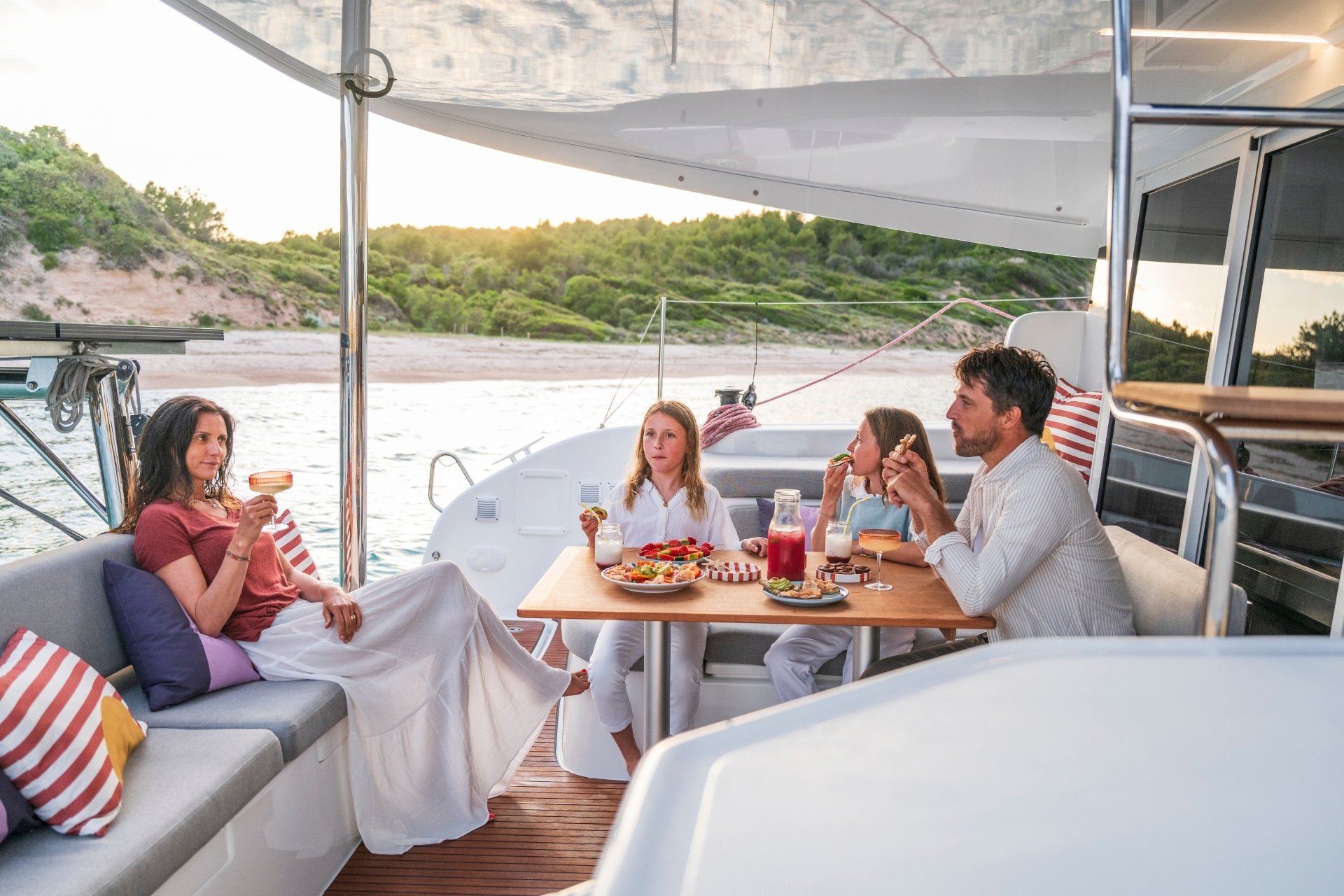
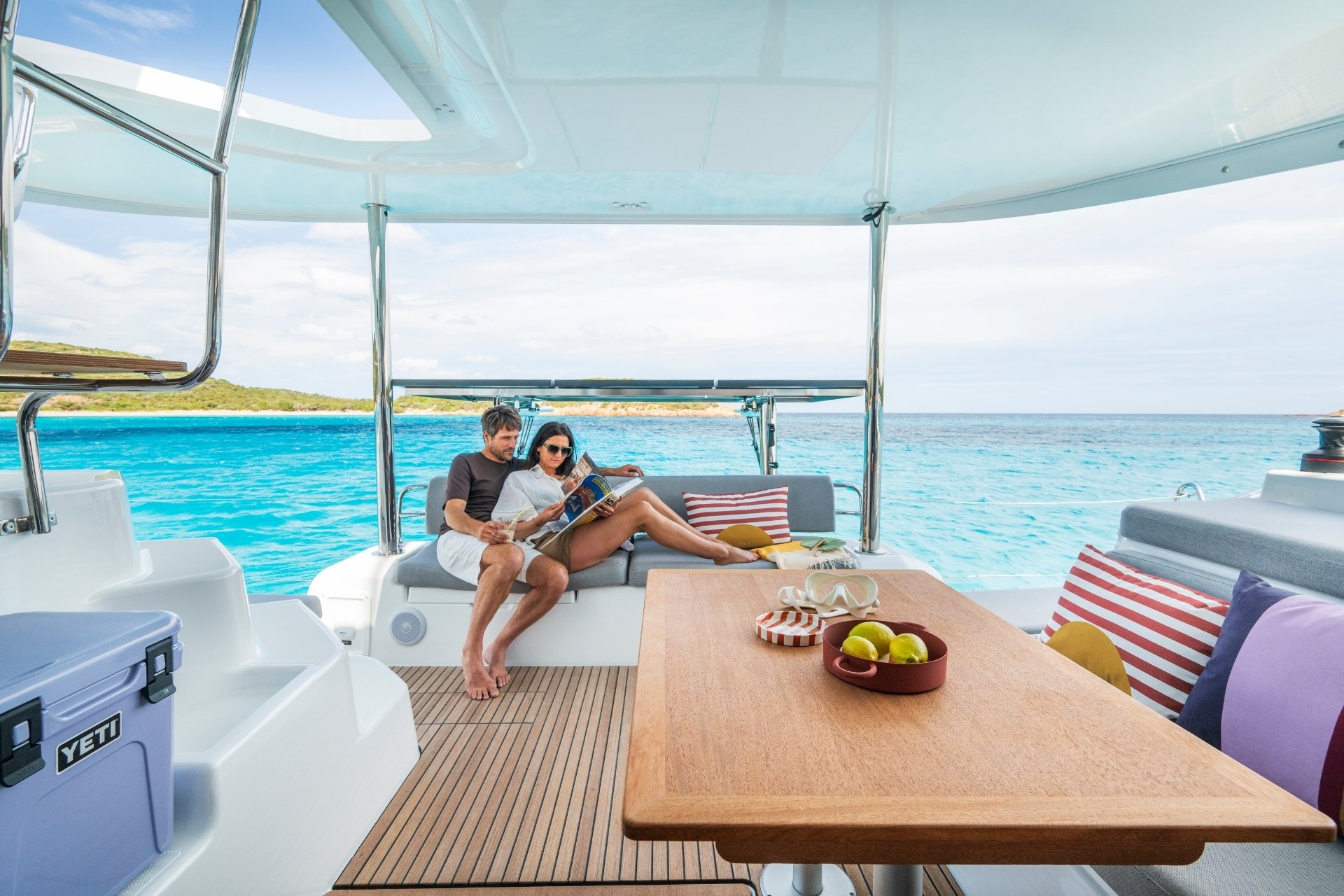
When the whole family lives on board, everyone needs to be able to move naturally from one space to another, spend time together or enjoy a quieter moment. At Lagoon, this way of living informs the design of open spaces, the flow between the cockpit, saloon and relaxation areas, as well as the provision of storage.

The boat’s autonomy also has an impact on family comfort. With several people on board, refrigerators, computers, internet connectivity, navigation equipment and even the washing machine all draw on available resources. To live comfortably on board, tank capacity, water treatment systems, as well as energy production and storage, should all be considered according to your programme and crew.

The constraints to anticipate before setting off to live on a catamaran

Just like at home, family life at sea comes with its share of everyday constraints. You may sometimes need to carry a few extra days’ worth of provisions, for example, in anticipation of a stopover where supplies are less readily available.

Your budget should be considered on a family-wide basis. In addition to the cost of the catamaran and its use, there are everyday expenses such as food, communications, activities and transport ashore, as well as, depending on the circumstances, education and healthcare.

On a long-distance voyage, maintenance is also part of the journey. To support owners while they travel, Lagoon relies on its international service network of more than 230 service points in nearly 50 countries.

The Lagoon service network

Which catamaran should you choose for family life on board?

The right family catamaran is not necessarily the one with the most equipment. Rather than starting with a standard budget, the Lagoon team recommends considering the composition of your crew and the number of children on board, your preferred sailing rhythm, the destinations you have in mind and the level of comfort you are looking for.

On board their Lagoon 55, Patrick and Babette Janssen regularly sail with their three children, now adults. Their goal is to continue travelling together while preserving comfort, privacy and family balance. The four cabins and the different spaces allowing them to spend time together or enjoy some privacy played an important role in their choice.

Discover their catamaran experience

Before buying, a catamaran charter lasting several days can help you test how life on board works in practice. You will get a better sense of where your children like to spend time, whether the storage works for the whole family, how mealtimes unfold and whether everyone can easily find a quiet place when they need one…

Cruising year-round on a catamaran: planning your project