Travel

Sailing year-round on a catamaran: how to prepare your project properly?

A growing number of sailors are drawn to the idea of setting off for 6 months, 8 months, or even to sail on a catamaran all year round. Some want to take a break from their career, others dream of traveling on a catamaran with their family, working remotely from different ports of call, or taking the time to discover the world at their own pace.

These projects can be very different, but they all rest on the same reality: a long voyage takes preparation before departure. Choosing the catamaran is an important step, but it is not enough to guarantee a successful trip: once you cast off, the itinerary, self-sufficiency, life on board, budget, and boat maintenance will all have a direct impact on your daily life.

In this article, the Lagoon team guides you in building a catamaran travel project that holds together.


Key takeaways – Sailing year-round on a catamaran

Sailing year-round on a catamaran requires preparing your project even before choosing your boat. The itinerary, crew composition, life on board, water and energy self-sufficiency, budget, maintenance, and owner support should all be anticipated from the outset. A catamaran suited to long-distance travel should let you live comfortably day to day, sail with peace of mind, and adapt your program along the way, according to your ports of call, your wishes, and the weather.

July 22, 2026

Defining your travel project before choosing a catamaran

When you start preparing a long voyage, it is tempting to focus on the boats right away. Yet this should not be the first step: choosing a catamaran should above all be a consequence of your project.

The length of your voyage, your crew, your lifestyle on board, and the destinations you want to explore will all directly shape the characteristics of your future boat.


Planning your catamaran voyage itinerary

Before choosing your catamaran, take the time to define your sailing plan:

Taking a sabbatical year in the Mediterranean, sailing an Atlantic circuit with your family, sailing in the Caribbean as a couple, or completing a solo round-the-world voyage will not call for the same preparation.

A crew planning to sail year-round in the Mediterranean can more easily arrange a return to their home port for maintenance, equipment replacement, or schedule adjustments. By contrast, an Atlantic circuit or round-the-world catamaran project requires more planning for periods of self-sufficiency, supply options, and the infrastructure available along the route.

Your sailing pace matters too: some crews enjoy stringing together crossings to discover several destinations as the seasons change. Others prefer to settle in the same bay for several weeks, to fully enjoy a place before heading back out to sea. Either way, what you expect from the boat will not be the same.

The sailing region will also have a direct bearing on your preparation: in the Mediterranean, the Caribbean, the Pacific, or on a round-the-world voyage, cyclone seasons, wind patterns, entry formalities in certain countries, and maintenance options vary considerably.

Building a realistic itinerary from the outset will help you better anticipate, for example, restocking periods and technical stopovers. This preparation will then give you more freedom to adapt your route along the way, based on the people you meet, your wishes, and the weather.


Crew composition and life on board

A year-round life on a catamaran can take different forms. A couple working remotely, a family with two children, or a solo sailor, for example, will not organize their daily life in the same way. On board, storage, workspace, privacy, and stowage needs will naturally evolve depending on crew composition and the lifestyle adopted.

Our advice, before choosing a boat, is to picture an ordinary week rather than an exceptional passage:

  • How will meals be organized?
  • Where will clothes, leisure equipment, or spare parts be stored? 
  • On board, how will everyone find their own space?
  • If you continue working, where will you work?

These practical questions often help steer the choice of catamaran toward a model genuinely suited to daily life.

Picturing life on a catamaran voyage

Once your sailing plan is roughly defined, we recommend thinking about your future daily life. Often, in a year-round life on board a catamaran project, it is no longer the crossings that take up most of your time: it is more the time spent at anchor, stopovers, meals, work, leisure... and boat maintenance. These very practical aspects will considerably shape your comfort on board!


The question of self-sufficiency

When you live year-round on a catamaran, self-sufficiency on board is what allows you to set your own pace of travel and make the most of every moment on the water.

It is your food, water, and power self-sufficiency, for example, that will let you stay for several days at an anchorage you like, without having to head to a marina to restock at the supermarket, refill your water tanks, or recharge the batteries. Being self-sufficient means sailing with greater freedom.


When a catamaran becomes your home, resource needs rise quickly. When it comes to choosing a catamaran for year-round travel, several elements need to be studied: freshwater tank capacity, any water treatment or production equipment, power generation, and food storage capacity.

A refrigerator, autopilot, navigation electronics, internet connection, or watermaker place heavy demands on board systems once the boat becomes a full-time home. Power generation and battery bank capacity should therefore be planned in line with your sailing program and the level of self-sufficiency you are aiming for.

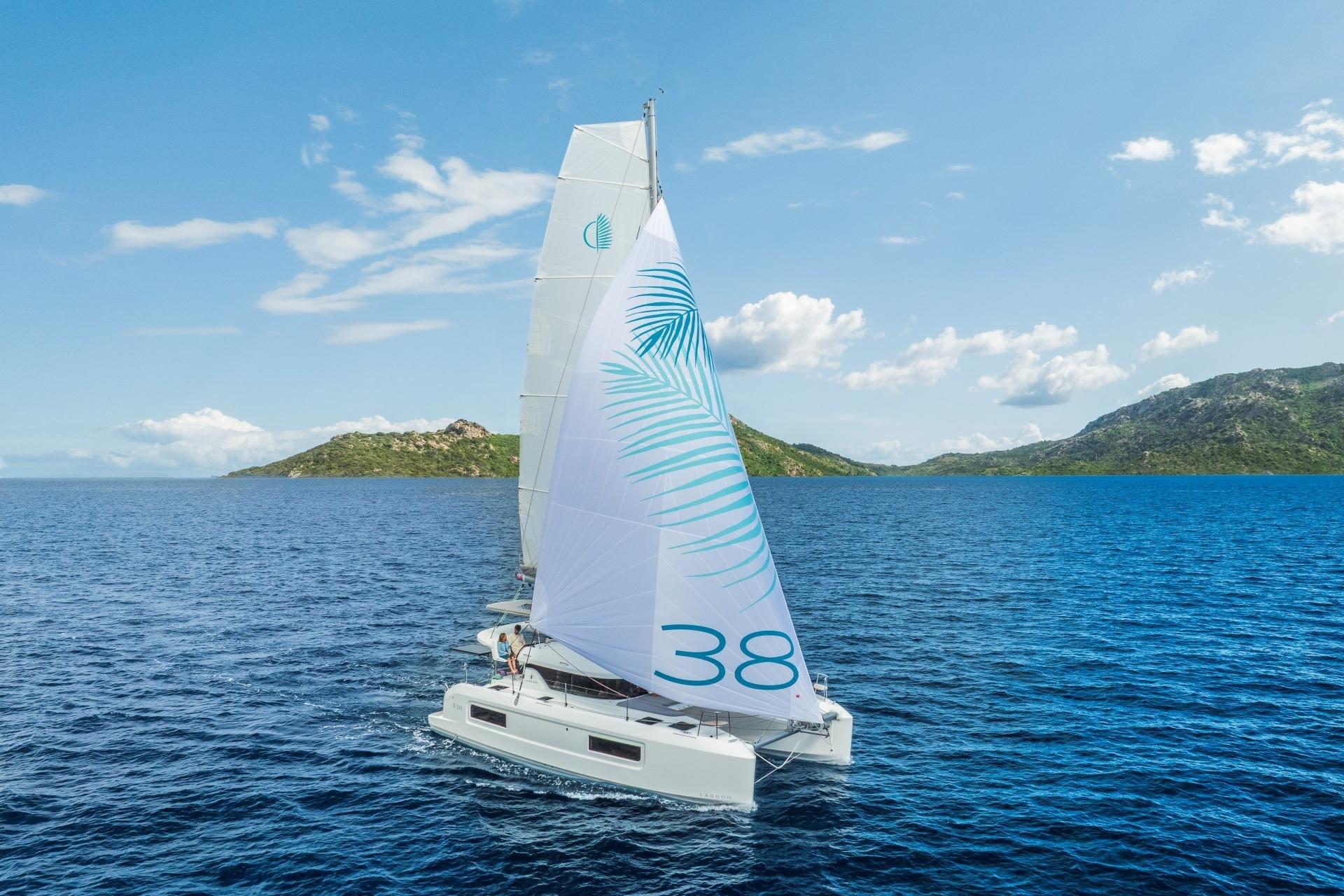
Across the various Lagoon sailing catamarans, from the Lagoon 38 to the Lagoon EIGHTY 2, interior volumes, circulation between living spaces, solutions supporting self-sufficiency, and ease of maneuvering are designed to meet the expectations of crews planning to sail for several years.


  • Good to know:

On certain Lagoon catamarans, the UVOJI purification system allows tap water to be consumed directly. This solution reduces the need to carry and store plastic bottles, frees up space on board, and helps protect the environment. In our view, this is a key piece of equipment for the comfort and self-sufficiency of catamaran travelers!


Comfort on board over the long term

When you visit a boat at a boat show or a dealership, it is easy to picture a beautiful sail or an idyllic anchorage. Yet, on a year-round catamaran voyage, there are also certain constraints – comparable to those of life in a house: preparing meals, putting away groceries, maintaining the boat, welcoming loved ones into your living space, and working on board several hours a day.

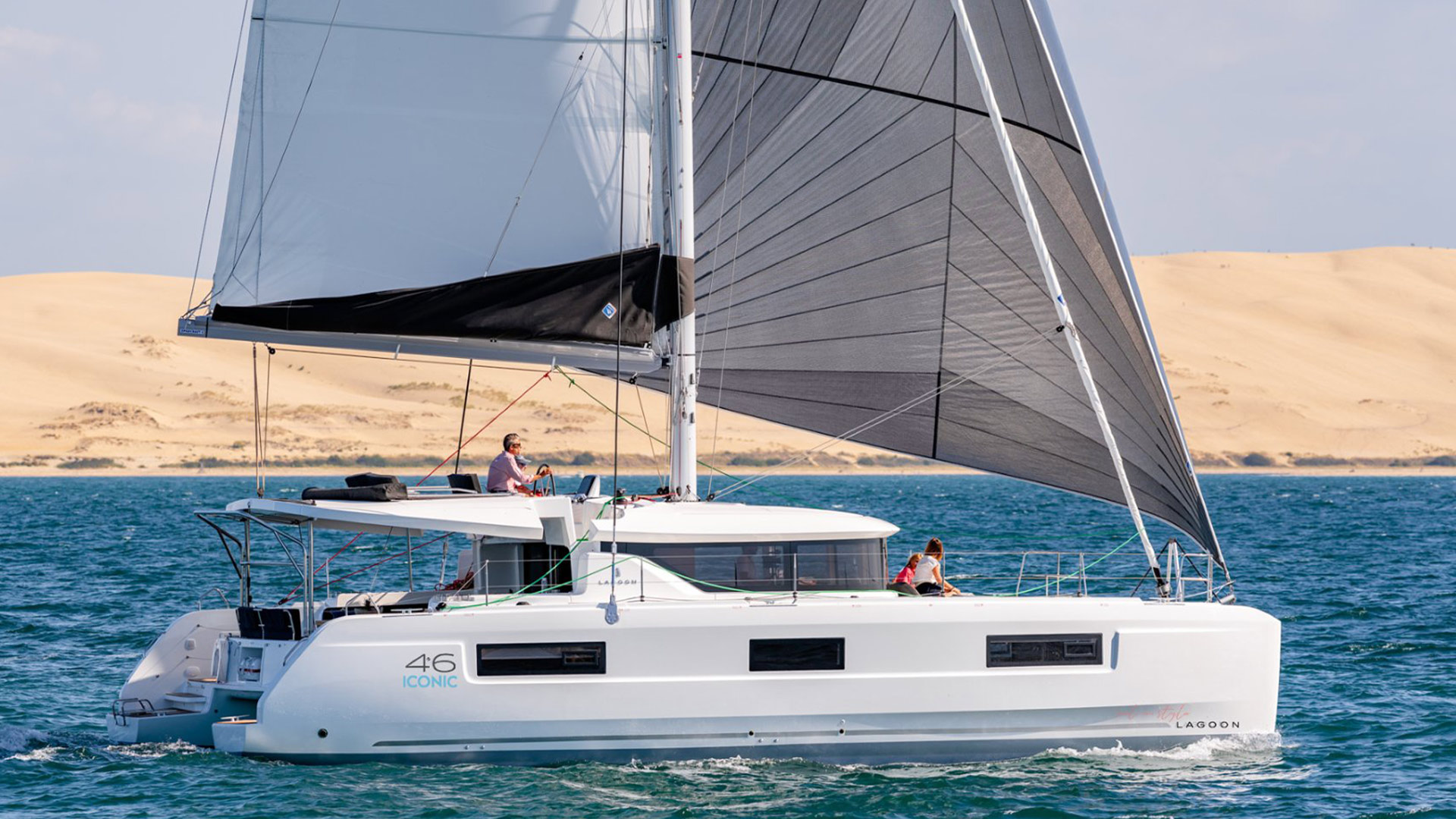
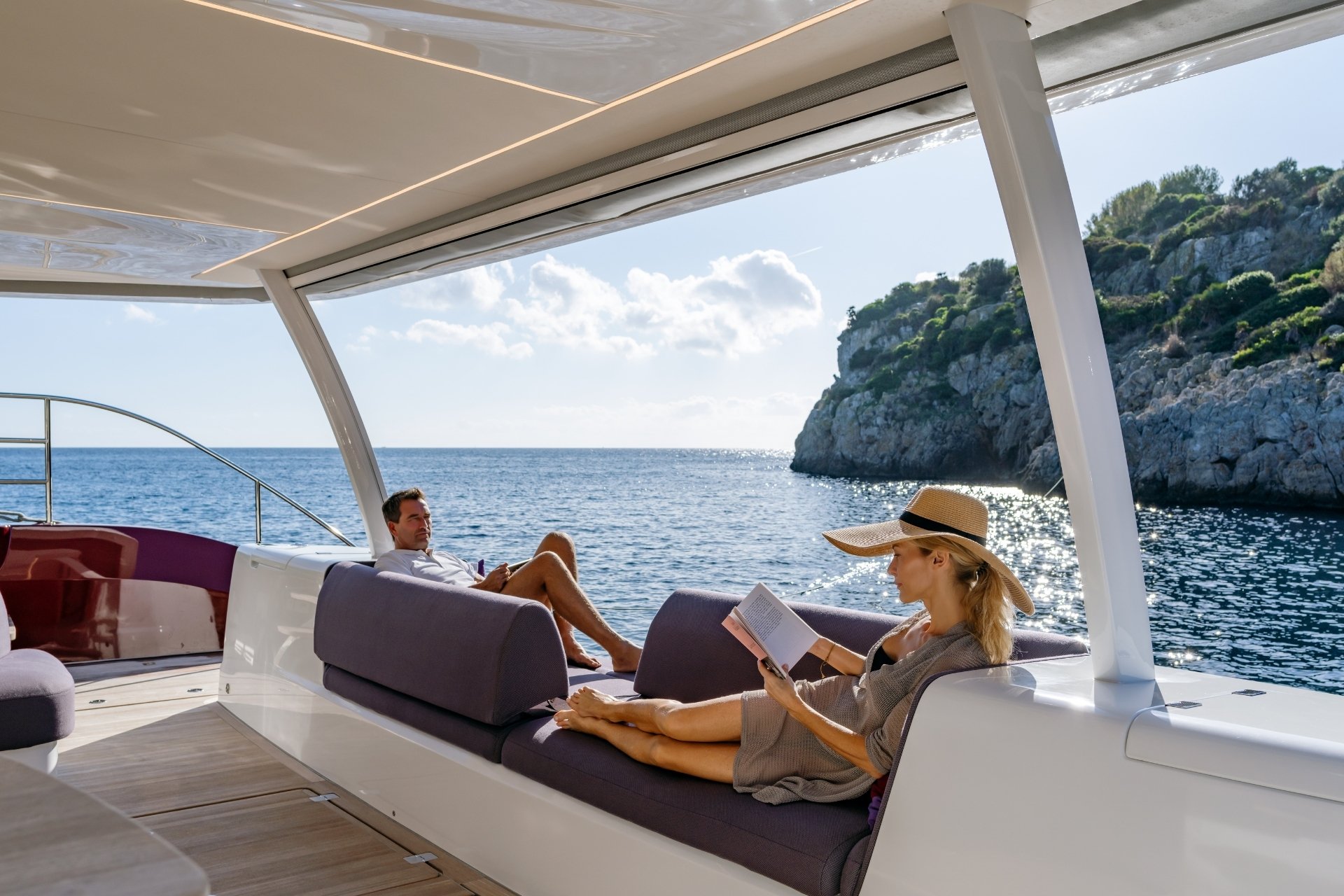
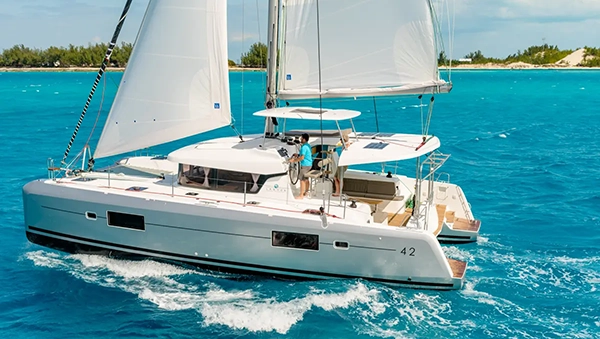
It is often in these situations that the qualities of a catamaran designed for long-distance travel make the difference. On Lagoon catamarans, on-board comfort is designed to support crews over the long term: open living spaces, smooth circulation between the cockpit, the saloon, and the relaxation areas, easily accessible storage volumes, and natural light all make everyday life easier, whether at anchor or underway.

Comfort while traveling with Lagoon

Travel budget: planning for expenses, and for the unexpected

The budget for a year-round catamaran voyage is not limited to fuel, mooring fees, or provisioning. It depends above all on your sailing pace, the destinations chosen, crew composition, and the level of comfort you are looking for.

Some expenses recur regularly and should be factored in from the start: hull cleaning, antifouling, engine servicing, replacing consumables, rigging checks, equipment maintenance, insurance, administrative formalities, marina fees...

On top of these come everyday expenses: groceries, communications, activities, transport ashore, and, for example, exploring local culture.

It is also important to set aside a margin for the unexpected. A part that needs replacing, a repair, a few extra days in a marina waiting for a weather window, or equipment ordered from abroad can quickly change the initial budget. This reserve is especially useful if you are taking on a year-round voyage on a secondhand catamaran.

Finally, the cost of the voyage varies considerably depending on your project: a family traveling by catamaran with children will not face the same expenses as a couple on a sabbatical year. A crew that favors quiet, less-visited anchorages will not build the same budget as one that prefers to stop at a marina every night. The fairest approach is therefore to plan a personalized budget, with a fixed portion for boat maintenance and a variable portion reflecting your lifestyle.

Costs to anticipate when buying a catamaran

Choosing a catamaran for years of travel

In our view, the ideal boat is not the one with the longest list of features on a spec sheet: it is the one that genuinely matches how you want to travel. A welcoming cockpit, smooth circulation, well-suited storage volumes, and equipment supporting self-sufficiency do more than shape the sailing experience: they clearly improve every day spent on board.

We recommend choosing a catamaran suited to your needs, one that can evolve along with you and your project.


With Lagoon, owner support that makes a difference

When preparing a catamaran voyage lasting several months or several years, choosing a boat comes naturally. But you are also choosing the environment that will support you throughout the project.

A long voyage always raises its share of questions: how do you arrange technical work far from your home port? Who can you turn to for advice on equipment or a repair? How do you get familiar with the boat before departure?

In these situations, it is always reassuring to know you can rely on a network and identified points of contact.


At Lagoon, this support begins even before the first sail: the delivery service allows new owners to get to grips with their catamaran and discover its equipment under the best conditions. It lets crews become familiar with how the catamaran works before departure.

Throughout the life of the boat, Lagoon customer service and the international network of dealers then support owners, whether for advice, arranging technical work, or following up on the catamaran throughout their voyages. Thanks to this, wherever they are, owners can continue their journey with confidence.


Whenever we have questions, we always get help. That’s what the big Lagoon family is about. We feel supported and looked after, whatever our concerns.

Doreen, Nicolas, and their family, aboard the Lagoon 42 Vitamin Sea

The Lagoon service network

Checks before setting off

As departure approaches, it is tempting to focus on last-minute purchases or the cruising itinerary. Yet a few checks can often help avoid a great deal of difficulty:

Before setting off on your long catamaran voyage, we recommend taking the time to complete several outings – with your crew and in varied conditions. These first moments of sailing and life on board will let you test maneuvering procedures, check that equipment works properly, adjust the organization on board, and identify anything you had not thought of – or the last details to refine.

Insurance, boat papers, administrative formalities, safety equipment, or the first-aid kit... Also make sure you have everything on board, and that it is all up to date and in order.

One last piece of advice from catamaran travelers: know how to adapt

Sailors who live year-round on board catamarans all agree: preparing a long voyage or a new life afloat is essential. But even with everything planned for, a long-voyage project almost always evolves.

Unfavorable weather, a stopover you want to extend, a crew you want to spend more time with, a conversation that changes the itinerary you had set... over several years of catamaran travel, it is very rare not to adjust the original program. The goal, then, is not to plan for everything, but to set off with a catamaran lifestyle project solid and coherent enough to bounce back and adapt, whatever the circumstances.


FAQ – Sailing year-round on a catamaran


Can you live on a catamaran all year round?

Yes, many sailors choose to travel for one or several years aboard their catamaran. This lifestyle does call for suitable preparation, though: choosing a boat designed for extended use, anticipating water and energy self-sufficiency, planning a realistic budget, and organizing daily life on board. The more thought that goes into the project beforehand, the easier it will be to adapt once underway.


What budget is needed to travel year-round on a catamaran?

There is no single budget. Expenses depend in particular on the destination, the number of people on board, the sailing pace, and the level of comfort sought. Beyond provisioning, fuel, and marina costs, it is essential to factor in boat maintenance, insurance, administrative formalities, and a reserve for the unexpected. This margin makes it possible, if needed, to adjust the voyage.


Which catamaran should you choose for a long voyage?

The best catamaran will above all be the one that matches your project. Before comparing models, define your project clearly! For a long voyage, favor a boat offering generous living volumes, suitable storage capacity, sufficient self-sufficiency, maneuvers that a reduced crew can handle, and a service network able to support you over the long term – wherever you are.


How much self-sufficiency should you plan for before a long voyage?

The level of self-sufficiency required depends on your itinerary and sailing pace. To make the most of anchorages and limit marina stops, we recommend planning ahead for water, power, food, and spare parts management. Equipment such as solar panels, a watermaker, or water purification solutions can improve your comfort during long periods of self-sufficiency.


How long does it take to prepare a year-round catamaran voyage?

We recommend starting your preparation as early as possible – ideally several months, at least, before departure. This will allow you to define the itinerary, choose the boat, carry out sea trials, equip the catamaran, sort out administrative matters, and get familiar with life on board. Generally speaking, the more gradual the preparation, the more smoothly the departure will go.